The Pulse on Perfusion: Perfusion Holiday Call, Incentives, and What “Fair” Really Means
The final Pulse on Perfusion poll of 2025 turned its attention to perfusion holiday call – a topic that naturally came into focus as teams closed out the year and navigated staffing around one of the most demanding times on the calendar. At Perfusion.com, this series continues to elevate perspectives from across the profession, capturing how perfusionists think about workload, compensation, and shared responsibility when schedules are tight and priorities compete. The responses reflect both the personal impact of holiday coverage and the structural realities of how programs assign and manage it. Together, they offer a clear snapshot of how fairness, flexibility, and teamwork intersect in real-world practice.
Poll Results at a Glance
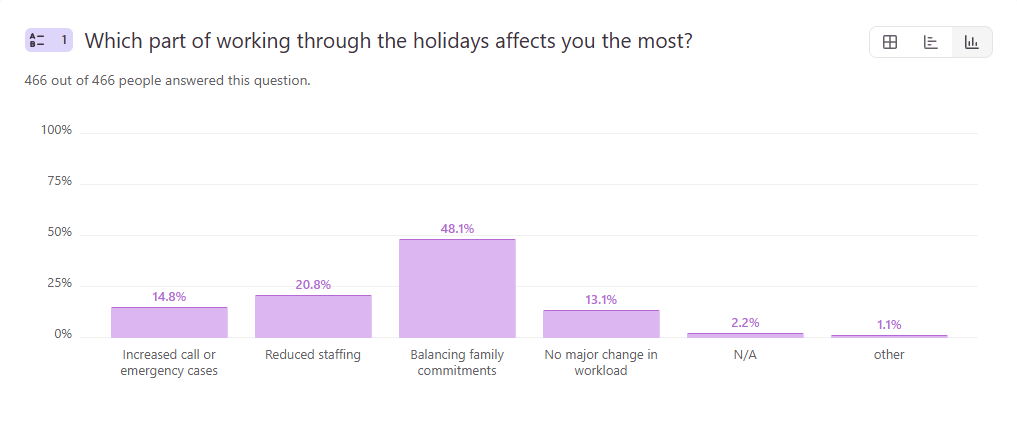
Question 1: Which part of working through the holidays affects you the most?
- Balancing family commitments – 48.1%
- Reduced staffing – 20.8%
- Increased call or emergency cases – 14.8%
- No major change in workload – 13.1%
- N/A – 2.2%
- Other – 1.1%
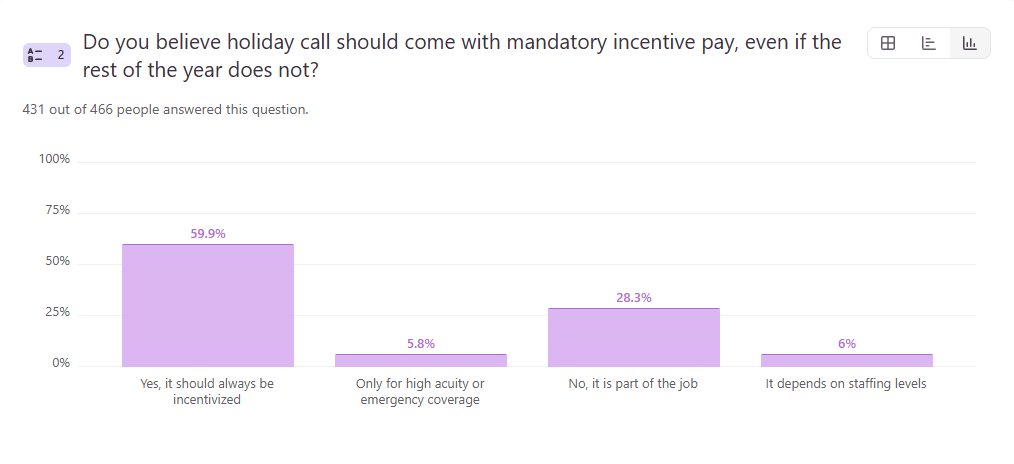
Question 2: Do you believe holiday call should come with mandatory incentive pay, even if the rest of the year does not?
- Yes, it should always be incentivized – 59.9%
- No, it is part of the job – 28.3%
- It depends on staffing levels – 6%
- Only for high acuity or emergency coverage – 5.8%
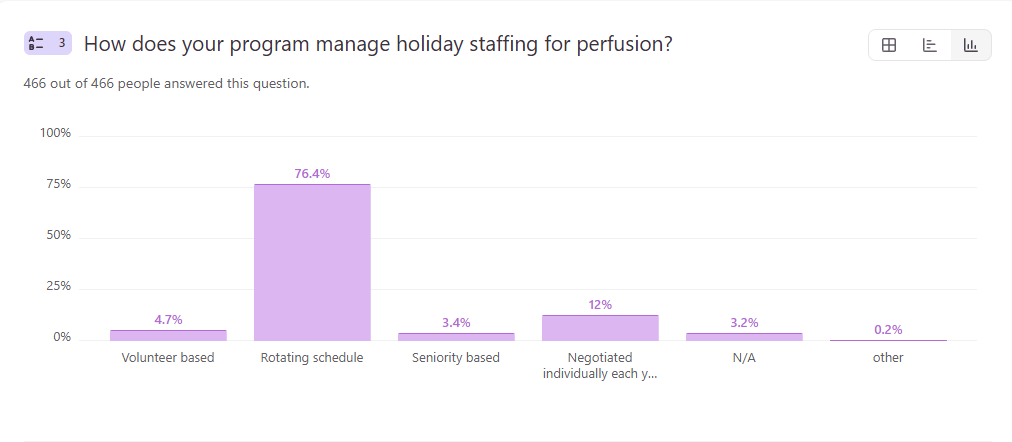
Question 3: How does your program manage holiday staffing for perfusion?
- Rotating schedule – 76.4%
- Negotiated individually each year – 12%
- Volunteer-based – 4.7%
- Seniority-based – 3.4%
- N/A – 3.2%
- Other – 0.2%
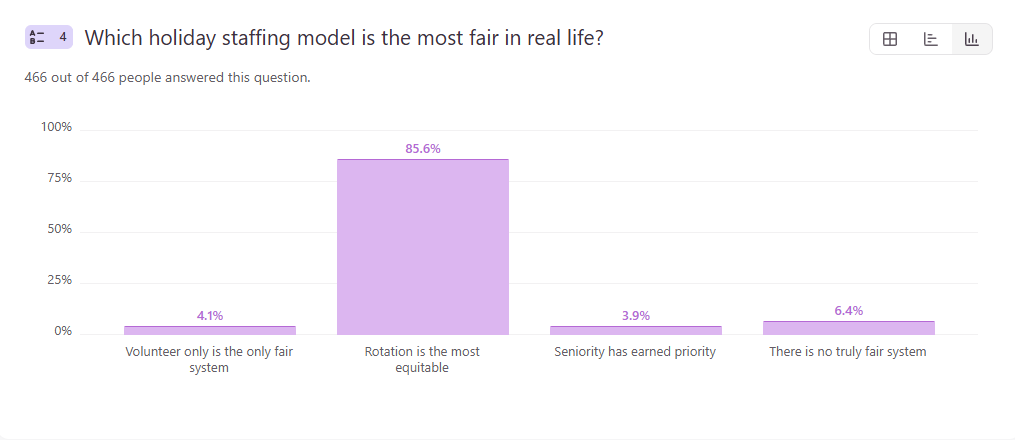
Question 4: Which holiday staffing model is the most fair in real life?
- Rotation is the most equitable – 85.6%
- There is no truly fair system – 6.4%
- Volunteer only is the only fair system – 4.1%
- Seniority has earned priority – 3.9%
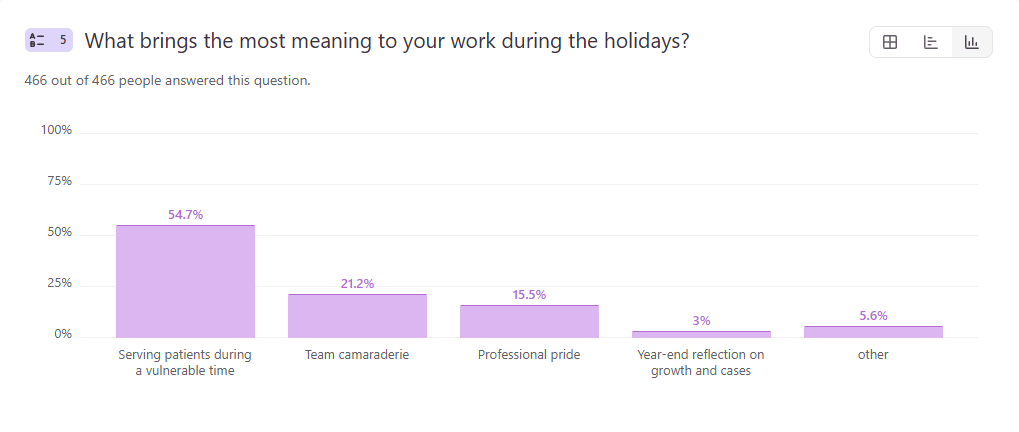
Question 5: What brings the most meaning to your work during the holidays?
- Serving patients during a vulnerable time – 54.7%
- Team camaraderie – 21.2%
- Professional pride – 15.5%
- Other – 5.6%
- Year-end reflection on growth and cases – 3%
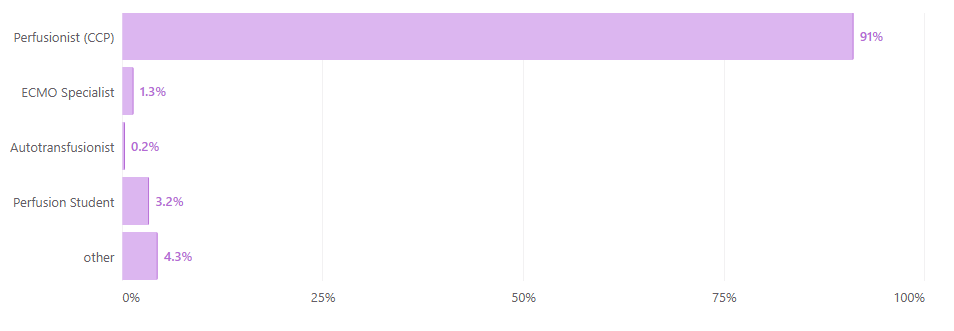
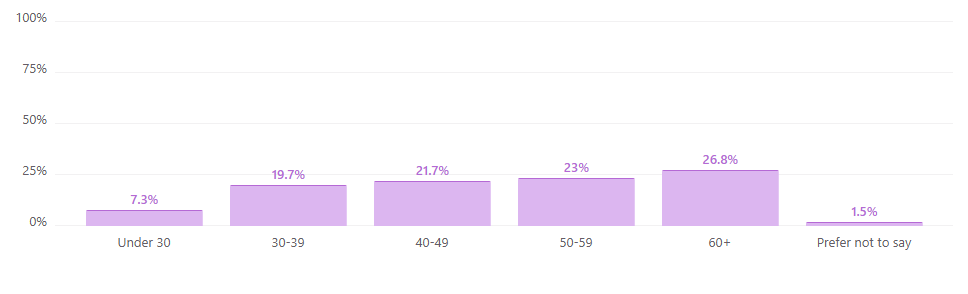
The respondent base was predominantly practicing certified clinical perfusionists, with strong representation across mid- to late-career professionals. This age distribution suggests that perspectives on holiday staffing are shaped by a mix of long-term experience and evolving workforce expectations.
Responses by Job Title
Responses by Age Range
Question 1: Holiday Workload Impact
Balancing family commitments emerged as the clear primary challenge, with 48.1% of respondents selecting it, well ahead of operational factors such as reduced staffing (20.8%) and increased call or emergency cases (14.8%). This highlights that the impact of holiday work extends far beyond the clinical environment, directly affecting personal time, relationships, and seasonal traditions.
The “Other” responses add further context, pointing to issues like scheduling constraints, overlapping responsibilities, and the emotional trade-offs that come with being on call during holidays. Taken together, the results reinforce that holiday staffing isn’t just a logistical exercise. It’s a deeply personal experience that shapes how perfusionists balance professional obligations with life outside the OR.
Question 2: Incentive Pay for Perfusion Holiday Call
A clear majority (59.9%) believe holiday call should always include incentive pay, signaling that many respondents view holiday coverage as more than just routine scheduling. It carries additional weight that merits additional compensation. At the same time, a meaningful 28.3% see perfusion holiday call as an inherent part of the role, reflecting a mindset where professional responsibility and patient care extend beyond standard work conditions.
This split underscores a broader tension between compensation and commitment. While most respondents favor recognizing holiday call with added pay, others emphasize that it remains a fundamental expectation of the job. The smaller segments of responses suggest that factors like staffing levels and clinical acuity can further shape how individuals interpret fairness when it comes to incentive structures.
Question 3: Holiday Staffing Models in Practice
Rotational scheduling stands out as the clear standard, with 76.4% of respondents reporting that their programs use this approach to manage holiday coverage. Other models, such as negotiated arrangements, volunteer-based systems, or seniority-driven assignments, appear far less common, serving more as exceptions than the norm.
The strong reliance on rotation suggests that most programs prioritize consistency and predictability when distributing holiday responsibilities. By standardizing how perfusion holiday call is assigned, teams can reduce ambiguity, streamline planning, and create a more balanced sense of shared responsibility across staff.
Question 4: Perceptions of Fairness
An overwhelming 85.6% of respondents identified rotational staffing as the most equitable approach, signaling a strong and shared belief that fairness is best achieved through equal distribution of holiday responsibilities. This consensus reinforces rotation not just as a common practice, but as the benchmark many perfusionists use when evaluating whether a system feels balanced and sustainable.
While a smaller portion of respondents pointed to volunteer-based, seniority-based, or even the idea that no system is entirely fair, these perspectives highlight that fairness can be interpreted in different ways depending on team structure and individual expectations. Still, the overall sentiment is clear: rotation is widely viewed as the most practical and balanced way to navigate holiday coverage while maintaining team cohesion.
Question 5: Meaning in Holiday Work
More than half of respondents (54.7%) pointed to serving patients during vulnerable moments as the most meaningful aspect of working through the holidays, reinforcing the core purpose that defines the profession. Even during a time of year often associated with personal commitments and time off, patient care remains the central anchor that gives holiday work its significance.
Beyond patient care, team camaraderie (21.2%) and professional pride (15.5%) also stood out as important sources of meaning. These responses suggest that while the holidays can introduce added challenges, they also create opportunities for connection, shared purpose, and a renewed appreciation for the role perfusionists play within their teams and in patient outcomes.
The “Other” responses add an additional layer of perspective, reflecting a wide range of individual motivations and personal contexts. Some respondents highlighted altruistic themes like helping others or supporting colleagues so they can spend time with their families, while others pointed to more personal considerations such as financial incentives, enjoying a quieter work environment, or valuing time off in different ways. A few noted that holiday work doesn’t feel inherently different from other times of the year, reflecting a more neutral or routine perspective on holiday coverage rather than one tied to added significance or distinction.
Question 6: Seniority vs. Equal Responsibility in Holiday Call
Question 6 was open-ended, and therefore, generated the most nuanced and opinion-rich responses in the poll, with a general lean toward equal distribution, though respondents were quick to note that the “right” approach often depends on program size, staffing structure, and team dynamics.
Many respondents emphasized that perfusion holiday call should be shared equally as a way to maintain fairness and protect team cohesion. As one participant put it,
“Everyone should rotate – we are one team!”
Others echoed this sentiment, noting that equal participation helps prevent resentment and reinforces a shared sense of responsibility:
“Everyone carries equal. No faster way to resent teammates.”
In this view, perfusion holiday call is not tied to tenure but rather understood as a collective obligation that everyone contributes to.
Several responses also highlighted the importance of inclusivity, particularly for newer staff. Equal distribution was seen as a way to ensure that less tenured team members are not disproportionately impacted or placed into systems that feel hierarchical. One respondent noted,
“Everyone carries equally to ensure new teammates are not taken advantage of,”
while another emphasized that
“tenure should not dictate preferences,”
reinforcing the idea that all team members deserve equitable access to personal and family time during the holidays.
At the same time, not all respondents viewed equal distribution as the only workable model. Some pointed out that seniority-based or hybrid approaches may make sense in certain environments, especially larger programs where experience and tenure can play a role in structuring schedules. Others suggested that flexibility, whether through negotiated schedules, trades, or optional arrangements, can help accommodate both individual preferences and operational needs. Compensation also emerged as a factor, with some respondents noting that incentive pay or voluntary coverage may influence how holiday call is approached.
A small number of responses leaned into a more pragmatic or individualized perspective, suggesting that fairness may ultimately depend on context rather than a universal rule. While approaches differ, the underlying theme remains consistent: programs must balance equity, sustainability, and team morale when determining how holiday responsibilities are shared.
Reflections on Equity and Perfusion Holiday Call
This poll highlights how holiday staffing extends beyond scheduling logistics into deeper questions of fairness, compensation, and team culture. While rotation remains the dominant and most widely accepted model, respondents made it clear that flexibility and context matter. Ultimately, the conversation reflects a profession that values both equity and adaptability, with patient care and team cohesion at the center of decision-making.
Stay tuned for the next Pulse on Perfusion as the series continues to share insights from across the community.
Appendix of Additional Insights
- Balancing family commitments remains the most significant holiday challenge across all age groups, especially among respondents under 40 (Under 30: 55.88%; 30–39: 59.78%), and gradually declines in older cohorts (60+: 40%). Older groups show relatively higher mentions of reduced staffing and increased call volume, indicating a shift in how holiday pressures are experienced over time.
- Reduced staffing is a consistent secondary factor across age groups, with noticeable variation by cohort. It is most prominent among younger respondents (Under 30: 32.35%) and becomes less dominant in mid-career groups before stabilizing again among older respondents, suggesting differing sensitivities to staffing constraints at various career stages.
- Support for mandatory incentive pay is strongest among younger respondents and decreases with age. A clear majority under 40 favor always incentivizing perfusion holiday call (Under 30: 70%; 30–39: 78%), while support softens in older groups. In the 60+ cohort, responses are nearly evenly split, with “No, it is part of the job” ranking as the top answer (47%) and “Yes, it should always be incentivized” close behind (42%), indicating a more balanced and nuanced perspective at later career stages.
- Overall, the data points to a generational shift in perspective, with earlier-career respondents prioritizing compensation and later-career respondents more likely to view holiday call as an expected professional responsibility.