The Pulse on Perfusion: Organ Donation and the Future of Transplant Innovation
Every month, The Pulse on Perfusion gives us a snapshot of what perfusionists are thinking, questioning, and debating, and this latest poll is no exception. From the emotional core of organ donation to the fast-moving world of transplant innovation, respondents offered thoughtful, experience-driven perspectives that reflect both the realities of the OR and the future they hope to see. These insights tell a powerful story: organ transplantation is evolving quickly, but its success still hinges on people, compassion, and practical advancements that make more life-saving procedures possible. Let’s take a closer look at what the community had to say.
Poll Results at a Glance
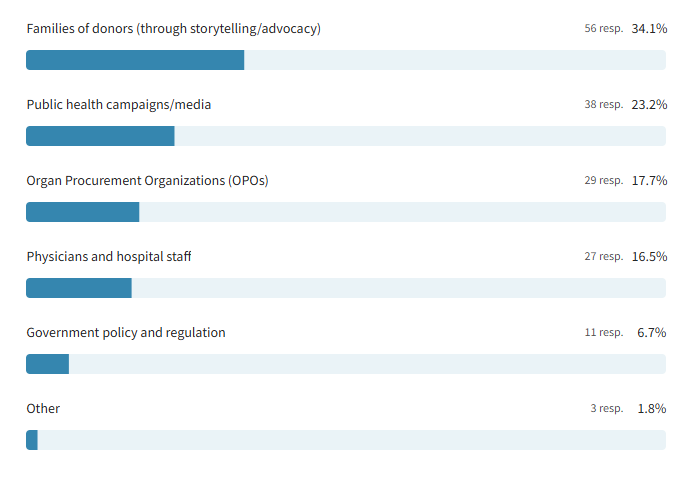
Question 1: Who do you think plays the most important role in encouraging organ donation?
- Families of donors (through storytelling/advocacy) – 34.1%
- Public health campaigns/media – 23.2%
- Organ Procurement Organizations (OPOs) – 17.7%
- Physicians and hospital staff – 16.5%
- Government policy and regulation – 6.7%
- Other – 1.8%
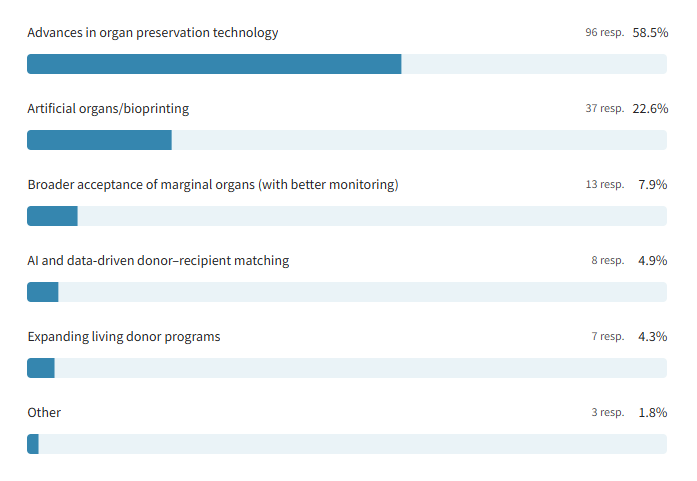
Question 2: Which innovation holds the most promise for the future of organ transplantation?
- Advances in organ preservation technology – 58.5%
- Artificial organs/bioprinting – 22.6%
- Broader acceptance of marginal organs (with better monitoring) – 7.9%
- AI and data-driven donor–recipient matching – 4.9%
- Expanding living donor programs – 4.3%
- Other – 1.8%
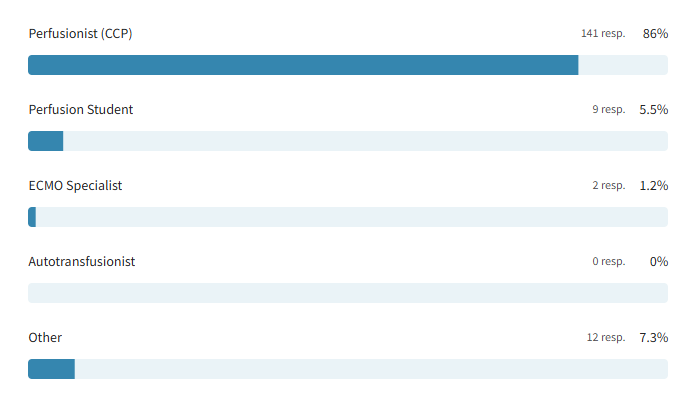
This month’s poll was dominated by certified clinical perfusionists (86%), with additional input from perfusion students, ECMO specialists, and others in related roles. Age distribution spanned across the profession, with particularly strong representation in the 50–59 (23.8%) and 60+ (23.2%) groups, followed closely by those 30–39 and 40–49 (both at 20.7%). This mix of early-, mid-, and late-career professionals provides a well-rounded view of how different generations perceive the future of organ transplantation.
Question 1: Who Encourages Organ Donation Most?
With 34.1% of the vote, respondents overwhelmingly identified families of donors as the most powerful advocates for organ donation. Their personal stories, shared often during moments of profound grief, can resonate more deeply than any billboard or public service announcement. Many perfusionists have directly witnessed how these narratives influence community attitudes, strengthen trust in the donation process, and inspire others to register as donors.
Support for families as the strongest advocates increased with age, suggesting that clinicians with more years of experience may have seen firsthand the emotional impact that donor families bring to public understanding.
Public health campaigns/media (23.2%) followed closely, especially among younger and mid-career respondents who recognize the importance of accessible education and broad awareness. Campaigns can normalize donation conversations, reach millions, and help create a culturally familiar narrative that helps families feel more prepared when faced with donation decisions.
OPOs (17.7%) and clinicians (16.5%) were also recognized for their critical roles at the bedside. OPOs are often deeply involved in education and coordination, while physicians and hospital staff guide families through the process with compassion and clarity. Though smaller in percentage, these votes reinforce the view that donation advocacy is a shared ecosystem, one where personal stories, education, and trustworthy guidance all intersect.
Question 2: What Innovation Holds the Most Promise?
Before diving into the results, one theme stood out: perfusionists overwhelmingly favored practical, scalable innovations – those capable of making a meaningful difference now or in the near future. While futuristic technologies are compelling, respondents gravitated toward advancements that directly improve graft viability, broaden access, and increase the number of successful transplants.
With that mindset, here’s how each option ranked.
Advances in Organ Preservation Technology – 58.5%
Organ preservation technology emerged as the clear frontrunner, receiving more than half of all votes. Respondents consistently emphasized how advancements in preservation have already reshaped transplant medicine, extending viability windows and reducing geographic limitations.
One respondent noted that “as we’ve seen developments in organ preservation technology, the ability for organ donation has been growing on a national scale,” explaining that where location once restricted allocation, patients can now receive organs across the country. Others echoed this sentiment, emphasizing how improved preservation supports equitable access and more efficient matching.
Several respondents expressed a strong emotional connection to this innovation, pointing out that donation represents an extraordinary act of generosity. As one noted, “such a selfless gift… only for poor preservation to ruin it all,” highlighting the frustration clinicians feel when technical limitations compromise otherwise viable organs.
The rise of machine perfusion also featured prominently in responses. One participant referenced how this technology has already expanded DCD liver utilization dramatically, noting that the United States is still in the early stages of widespread adoption. Collectively, these insights position preservation technology not as a future promise, but as the most immediate and impactful driver of transplant growth.
Artificial Organs and Bioprinting – 22.6%
Artificial organs and bioprinting ranked second, reflecting strong belief in their long-term potential. Respondents viewed this innovation as the most definitive solution to chronic organ shortages.
Several emphasized the promise of patient-specific organs. One respondent explained that “artificial organs… offer a long-term solution to the shortage,” noting that using a patient’s own cells could significantly reduce rejection and improve long-term outcomes. Others highlighted the ethical implications, suggesting that engineered organs could bypass many moral and religious barriers that continue to limit donation rates worldwide.
While respondents acknowledged the technology remains in early stages, many saw bioprinting as the eventual endpoint of transplant evolution, one capable of eliminating waitlists altogether.
Broader Acceptance of Marginal Organs (with Better Monitoring) – 7.9%
Those who selected this option focused on how evolving recovery and monitoring techniques are redefining what constitutes an acceptable organ. With the introduction of NRP and ex vivo support, organs previously rejected due to hypoxia or ischemic injury can now be evaluated, rehabilitated, and safely transplanted.
As one respondent described, “organs considered marginal… can be revived to an improved hemodynamic and oxygenated state,” fundamentally expanding the usable donor pool. This group viewed marginal-organ utilization as a natural extension of preservation innovation, one that maximizes existing donations rather than relying solely on increasing donor numbers.
AI and Data-Driven Donor–Recipient Matching – 4.9%
Although fewer respondents selected AI-driven matching, those who did emphasized its role in precision medicine. One participant noted that “evolution of medicine will greatly be impacted by modern-day AI advances,” while another pointed out that “the better the match, the higher chance of success.”
Beyond matching alone, respondents recognized AI’s potential to improve allocation logistics, predict graft performance, and support faster decision-making. While not yet central to transplant workflows, its value as a complementary tool was clearly acknowledged.
Expanding Living Donor Programs – 4.3%
Living donor programs received the smallest share of votes but remained an important part of the conversation. Respondents highlighted the biological advantages of living donation and the opportunity to increase access when paired with improved preservation methods.
One respondent noted that “if we can better preserve organs over a longer period of time, more people could receive the life-saving operations,” reinforcing the interconnected nature of innovation across the transplant continuum.
An Ongoing Conversation in Organ Donation
This month’s poll underscores just how multifaceted organ donation and transplantation truly are. From advocacy and public awareness to evolving technologies and clinical innovation, perfusionists recognize that progress rarely comes from a single pathway. The diversity of responses reflects a profession deeply engaged in ongoing dialogue – one shaped by experience, curiosity, and a shared responsibility to patients. As transplantation continues to evolve, these conversations remain essential to understanding where the field has been and where it may be headed next.
Want to continue the conversation? Check out our previous Pulse on Perfusion poll blog exploring Color Vision, Readiness, and the Path to Perfusion School to see how future perfusionists are navigating entry into the field.
Appendix of Additional Insights
Age-Based Trends Highlight Generational Perspectives
Younger respondents (Under 30)
- Prioritized public awareness efforts over personal advocacy.
- Showed notable support for AI matching relative to other groups.
- Reflected a more “systems-oriented” outlook on donation and innovation.
Respondents 30–59
- Consistently favored donor families as the primary advocates.
- Showed the strongest and most consistent support for preservation technology.
- Reflected a blend of clinical experience and openness to emerging tools.
Respondents 60+
- Most strongly supported donor families, suggesting a deepened appreciation for personal narratives.
- Showed the highest interest in marginal-organ rehabilitation and living donor programs, possibly reflecting decades of witnessing donor shortages firsthand.
Technology Preferences Strengthen with Experience
Across all age groups, preservation technology dominated, but support increased steadily with age, peaking in the 60+ group. This may reflect clinicians who have witnessed how transformative extended preservation windows and machine perfusion already are in practice.