The Pulse on Perfusion: Communication Under Pressure in the OR
High-acuity cases can change quickly. A patient complication, an unexpected change in the surgical plan, or a technical issue can turn an already complex procedure into a high-pressure situation where every member of the OR team needs to stay aligned.
This month’s Pulse on Perfusion explored what perfusion professionals identify as the biggest sources of stress during challenging cases, who they rely on most for communication, and how effectively their teams communicate when the stakes are high. The responses point to a clear connection between communication, preparation, and the ability to respond when a case takes an unexpected turn.
Poll Results at a Glance
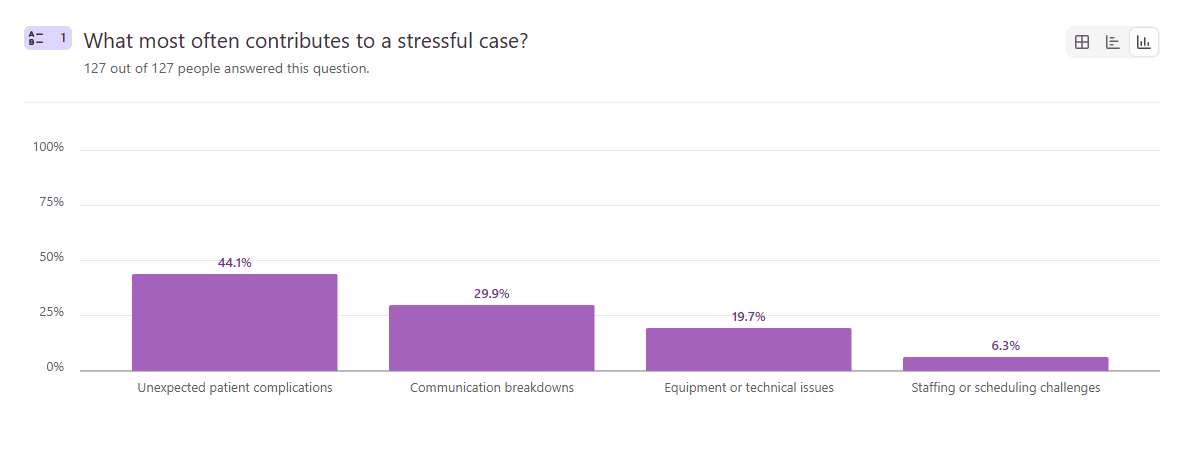
Question 1: What most often contributes to a stressful case?
- Unexpected patient complications – 44.1%
- Communication breakdowns – 29.9%
- Equipment or technical issues – 19.7%
- Staffing or scheduling challenges – 6.3%
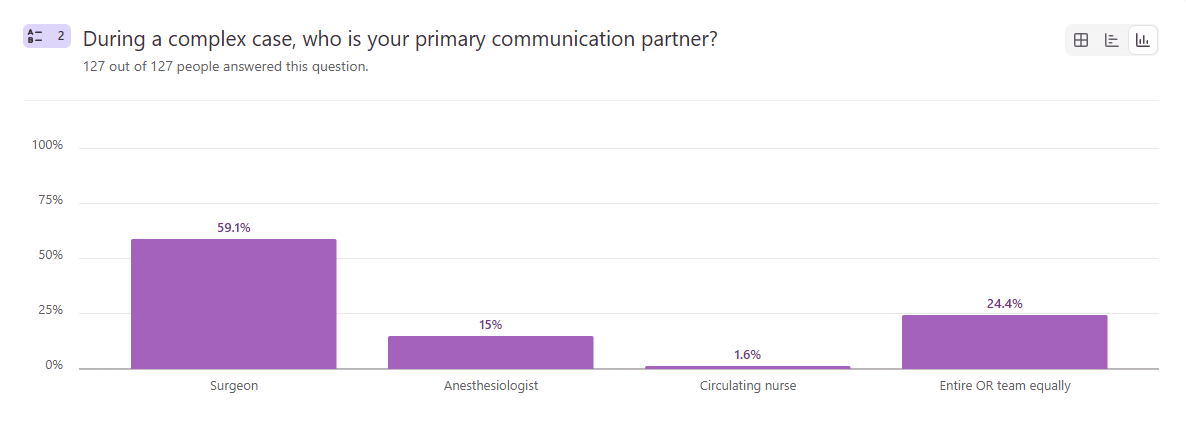
Question 2: During a complex case, who is your primary communication partner?
- Surgeon – 59.1%
- Entire OR team equally – 24.4%
- Anesthesiologist – 15%
- Circulating nurse – 1.6%
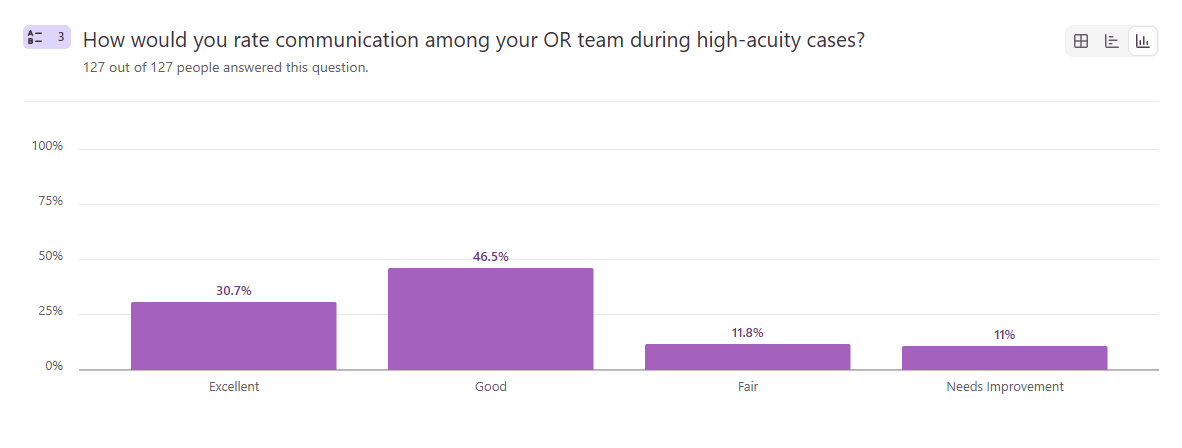
Question 3: How would you rate communication among your OR team during high-acuity cases?
- Good – 46.5%
- Excellent – 30.7%
- Fair – 11.8%
- Needs Improvement – 11%
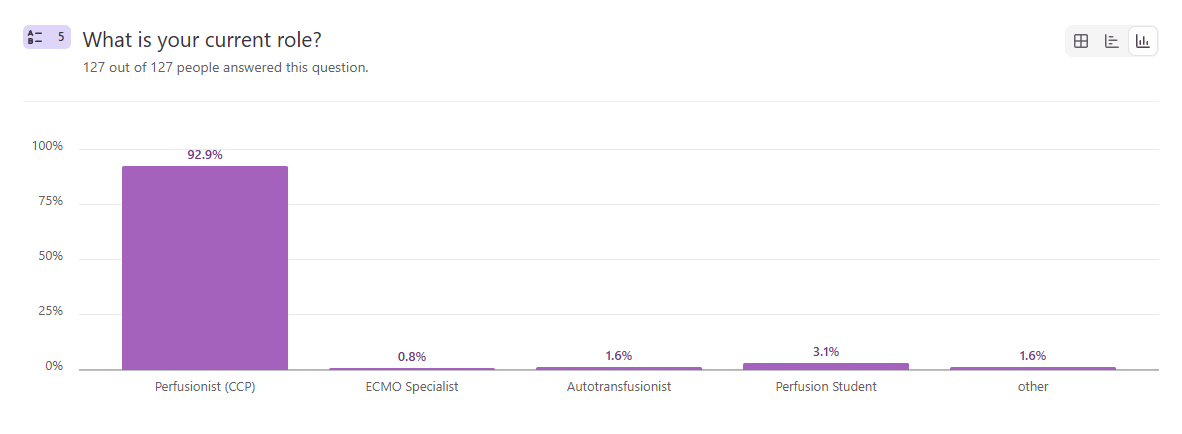
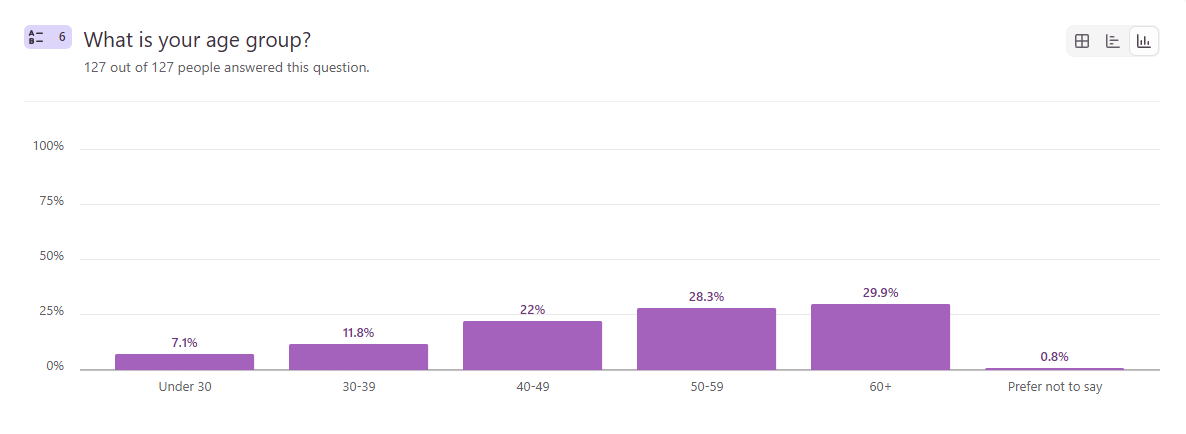
The poll primarily reflects the perspectives of practicing perfusionists, who made up 92.9% of respondents. The age distribution also leaned toward experienced clinicians, with 58% of respondents aged 50 or older, offering perspectives shaped by substantial time working in the OR.
Job Roles
- Perfusionist (CCP) – 92.9%
- Perfusion Student – 3.1%
- Autotransfusionist – 1.6%
- Other – 1.6%
- ECMO Specialist – 0.8%
Age Demographics
- 60+ – 29.9%
- 50-59 – 28.3%
- 40-49 – 22%
- 30-39 – 11.8%
- Under 30 – 7.1%
- Prefer not to say – 0.8%
Question 1: What Makes a Case Stressful?
Unexpected patient complications were the leading source of stress, selected by 44.1% of respondents. Communication breakdowns followed closely at 29.9%, while equipment or technical issues accounted for another 19.7%. Staffing and scheduling challenges were selected by just 6.3%.
The results reinforce how quickly the dynamics of a case can change when a patient complication arises. At the same time, the fact that nearly one-third of respondents identified communication breakdowns as their biggest source of stress is significant. Communication is one factor the OR team can actively influence, particularly when unexpected events require everyone to adjust to a new plan.
The relatively high response for equipment and technical issues also highlights another source of pressure for perfusionists. When technology or equipment does not perform as expected, the team needs to communicate clearly while simultaneously troubleshooting and maintaining focus on the patient.
Together, the responses suggest that stress during a complex case often comes from situations that require rapid coordination. Preparation can help, but teams also need communication practices that allow them to respond effectively when the original plan changes.
Question 2: Who Is the Primary Communication Partner?
For 59.1% of respondents, the surgeon is their primary communication partner during a complex case. Another 24.4% said they communicate with the entire OR team equally, while 15% identified the anesthesiologist as their primary communication partner.
The strong preference for the surgeon reflects the close coordination required between perfusion and the surgical team throughout many high-acuity procedures. The perfusionist needs to understand what is happening surgically while communicating critical information about the patient’s status and the perfusion plan.
At the same time, nearly one-quarter of respondents identified the entire OR team equally. That response points to a broader view of communication in which patient care depends on multiple disciplines staying informed rather than communication moving primarily between two individuals.
The anesthesiologist’s role also remains important, particularly when patient physiology changes quickly. While the numbers show different primary communication patterns, they ultimately point to the same need: information has to move quickly and accurately among the people making decisions at the bedside.
Question 3: How Well Does the OR Team Communicate During High-Acuity Cases?
Most respondents gave their OR teams positive marks for communication during high-acuity cases. Nearly half (46.5%) rated communication as good, while another 30.7% rated it excellent. Still, almost 23% described communication as either fair or needing improvement.
That split is worth examining. The fact that more than three-quarters of respondents rated communication as good or excellent suggests that many teams have developed effective ways to work together under pressure. However, the nearly one-quarter who selected fair or needs improvement indicate that there is still meaningful room to strengthen communication practices.
High-acuity cases place different demands on communication than routine procedures. Team members may need to process new information quickly, anticipate what will happen next, speak up about concerns, and make sure instructions are understood. Even strong teams can benefit from structured communication practices that reduce ambiguity when the pressure increases.
The written responses to Question 4 provide a closer look at what some teams are doing to create that clarity.
Question 4: What Helps OR Teams Communicate During Challenging Cases?
The written responses revealed several recurring practices that teams use to keep communication clear when cases become more difficult. Across the answers, three themes stood out: closed-loop communication, preparation and timeouts, and creating space for team members to speak up.
Closing the Communication Loop
Several respondents emphasized repeating or confirming instructions, so everyone knows that a message was heard and understood.
One respondent described the practice simply:
“Answers commands by repeating request”
Another explained:
“Everything said is acknowledged or repeated back, if not, it is assumed the person did not hear it and it is repeated.”
Others specifically identified closed-loop communication as a way to reduce errors and maintain constant feedback. These practices can become particularly important when multiple conversations and competing sounds are present in the OR.
Establishing the Plan Before Things Get Difficult
Preparation was another common theme. Respondents described using timeouts, briefings, and discussions before complicated portions of a procedure to make sure everyone understands what is coming.
As one respondent explained:
“Discuss the game plan before diving into a tricky portion of the procedure. Make sure we’re both/all aware of the series of events about to take place.”
Another noted:
“Surgeon discusses order of operations ahead of time. Does a mini time out with order of next steps before circ arrest”
These responses highlight how communication before a critical moment can give the team a shared framework for responding once the case becomes more demanding.
Creating Space to Speak and Listen
Respondents also emphasized the importance of making sure concerns can be raised and heard. One wrote:
“Anyone is allowed to ask a question or for clarification at any time regarding the care and safety of the patient.”
Others mentioned reducing noise, turning off music, and ensuring people speak loudly enough for everyone to hear. One team even uses a whiteboard to track concerns and triggers a timeout when several issues begin accumulating.
Together, these responses suggest that effective OR communication depends on both structure and culture. Teams can establish formal practices such as timeouts and closed-loop communication, while also creating an environment where people feel comfortable speaking up when something does not look right.
Reflections on Communication in High-Acuity Cases
This month’s Pulse on Perfusion highlights how much communication matters when an OR team is navigating uncertainty. Unexpected patient complications were the leading source of stress, but respondents also identified specific communication practices that help teams stay coordinated when those complications arise.
From closed-loop communication and structured timeouts to reducing distractions and encouraging questions, the responses show that effective communication is often built through repeatable habits. In high-acuity cases, those habits can help teams maintain a shared understanding of what is happening and what needs to happen next.
Stay tuned for the next Pulse on Perfusion as the series continues to share insights from across the community.