The Pulse on Perfusion: Perfusion Workforce Growth, Demand, and the Future of the Profession

Is the perfusion workforce growing in step with demand, or quietly drifting out of balance? This month’s Pulse on Perfusion dives into a question that’s top of mind across the field: how training expansion, job market shifts, and evolving clinical roles are shaping the future of the profession. The responses reveal a mix of opportunity and concern, with many clinicians weighing whether current growth trends are sustainable. At Perfusion.com, this poll brings those perspectives into focus and highlights where the conversation is heading next.
Poll Results at a Glance
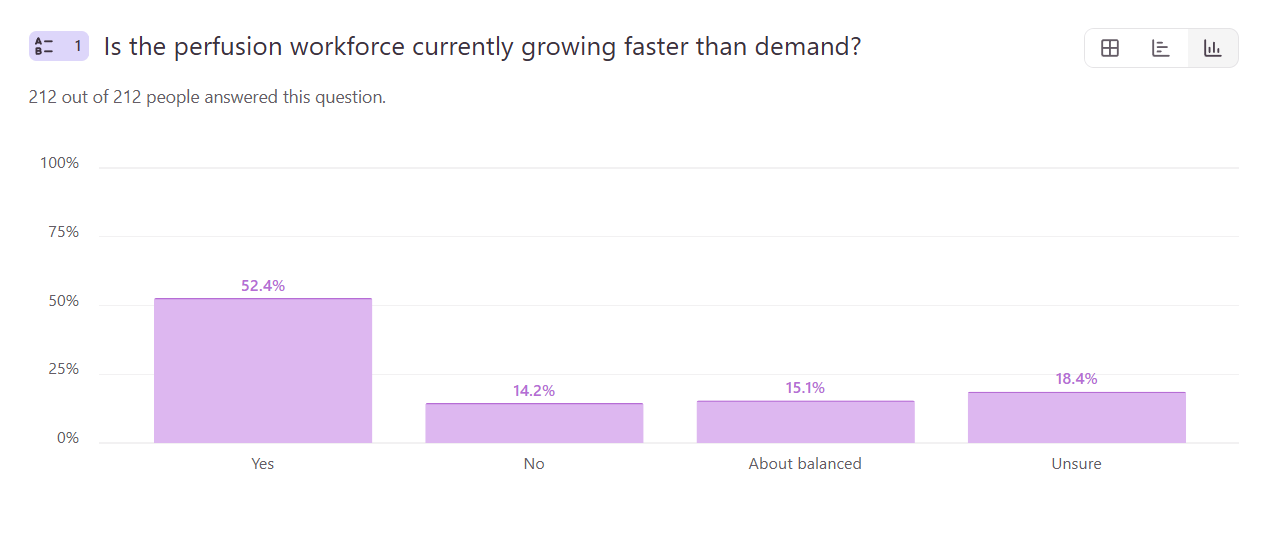
Question 1: Is the perfusion workforce currently growing faster than demand?
- Yes – 52.4%
- Unsure – 18.4%
- About balanced – 15.1%
- No – 14.2%
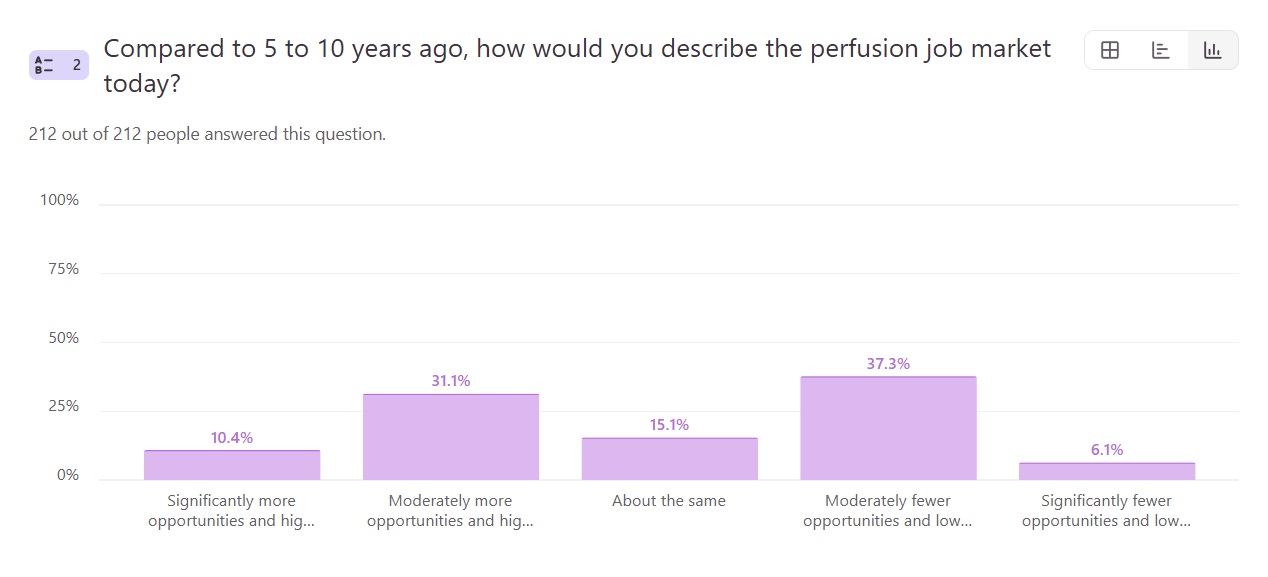
Question 2: Compared to 5 to 10 years ago, how would you describe the perfusion job market today?
- Moderately fewer opportunities and lower demand – 37.3%
- Moderately more opportunities and higher demand – 31.1%
- About the same – 15.1%
- Significantly more opportunities and higher demand – 10.4%
- Significantly fewer opportunities and lower demand – 6.1%
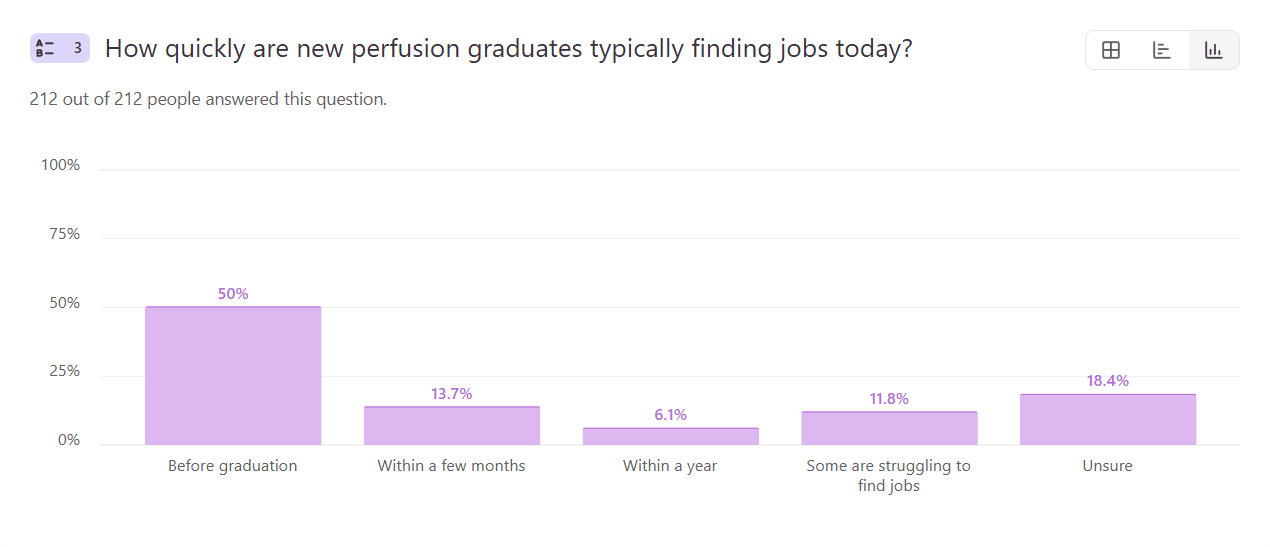
Question 3: How quickly are new perfusion graduates typically finding jobs today?
- Before graduation – 50%
- Unsure – 18.4%
- Within a few months – 13.7%
- Some are struggling to find jobs – 11.8%
- Within a year – 6.1%
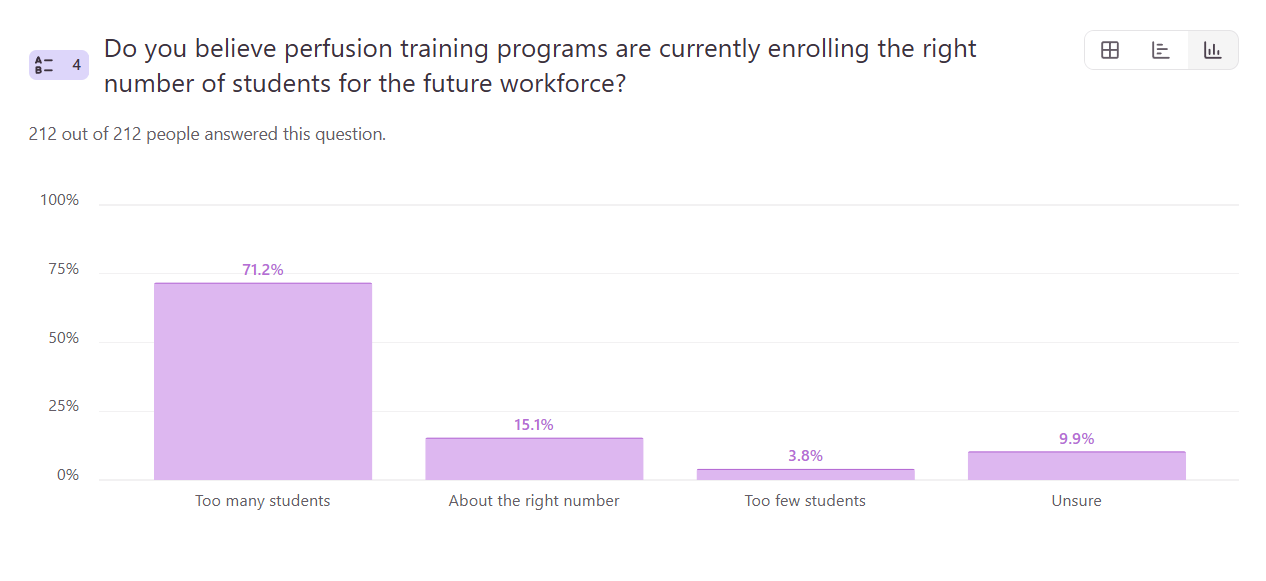
Question 4: Do you believe perfusion training programs are currently enrolling the right number of students for the future workforce?
- Too many students – 71.2%
- About the right number – 15.1%
- Unsure – 9.9%
- Too few students – 3.8%
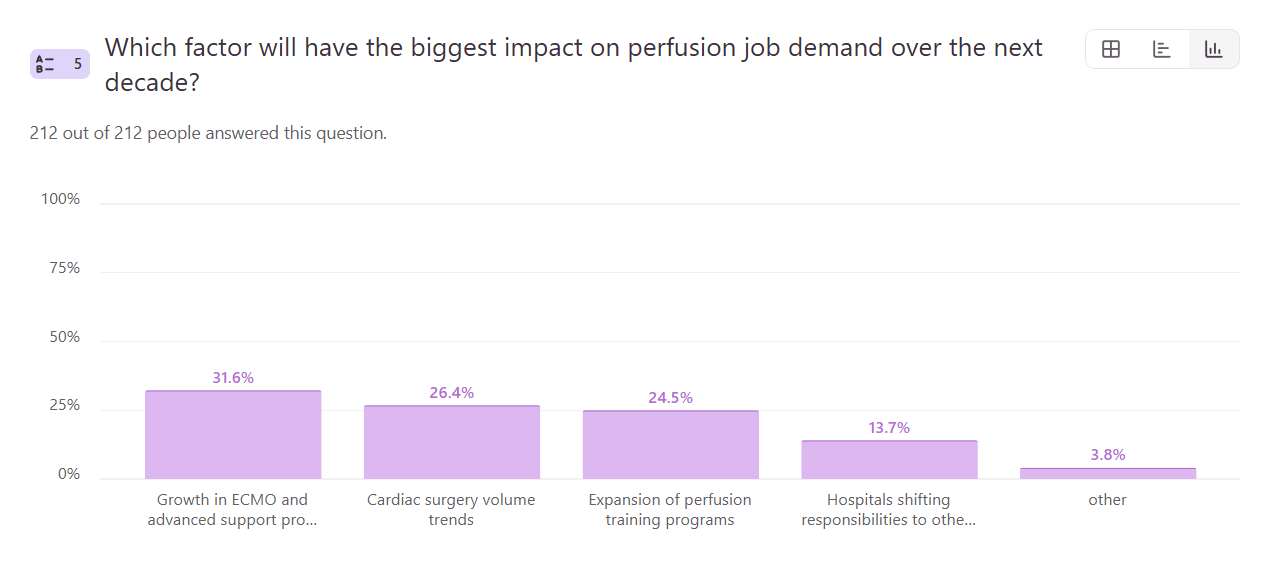
Question 5: Which factor will have the biggest impact on perfusion job demand over the next decade?
- Growth in ECMO and advanced support programs – 31.6%
- Cardiac surgery volume trends – 26.4%
- Expansion of perfusion training programs – 24.5%
- Hospitals shifting responsibilities to other roles – 13.7%
- Other – 3.8%
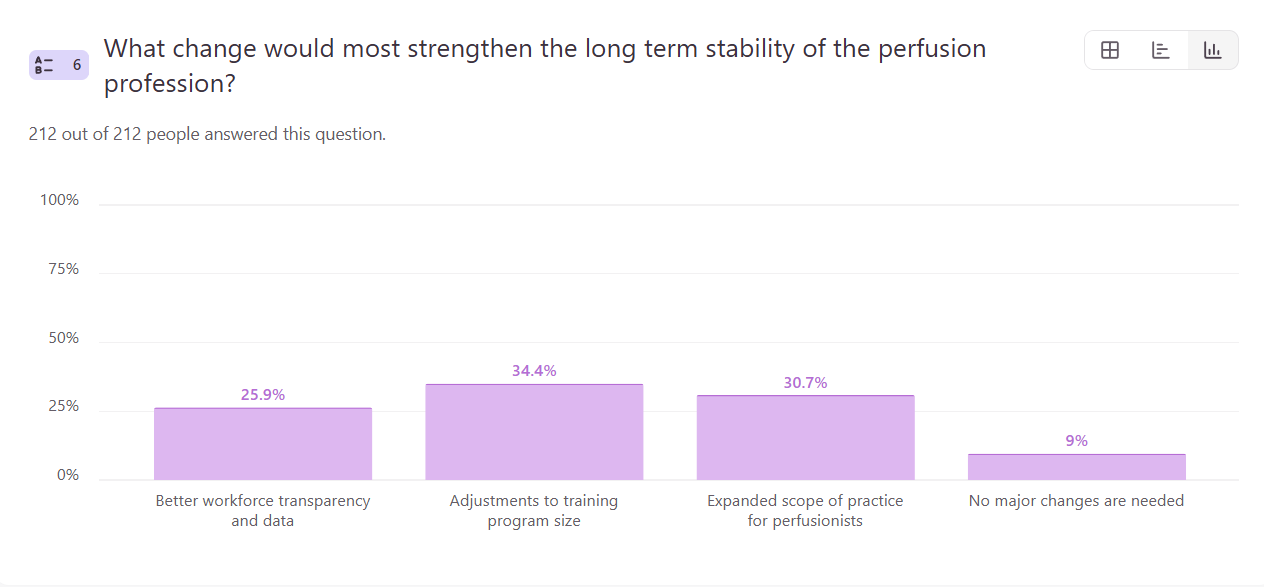
Question 6: What change would most strengthen the long term stability of the perfusion profession?
- Adjustments to training program size – 34.4%
- Expanded scope of practice for perfusionists – 30.7%
- Better workforce transparency and data – 25.9%
- No major changes are needed – 9%
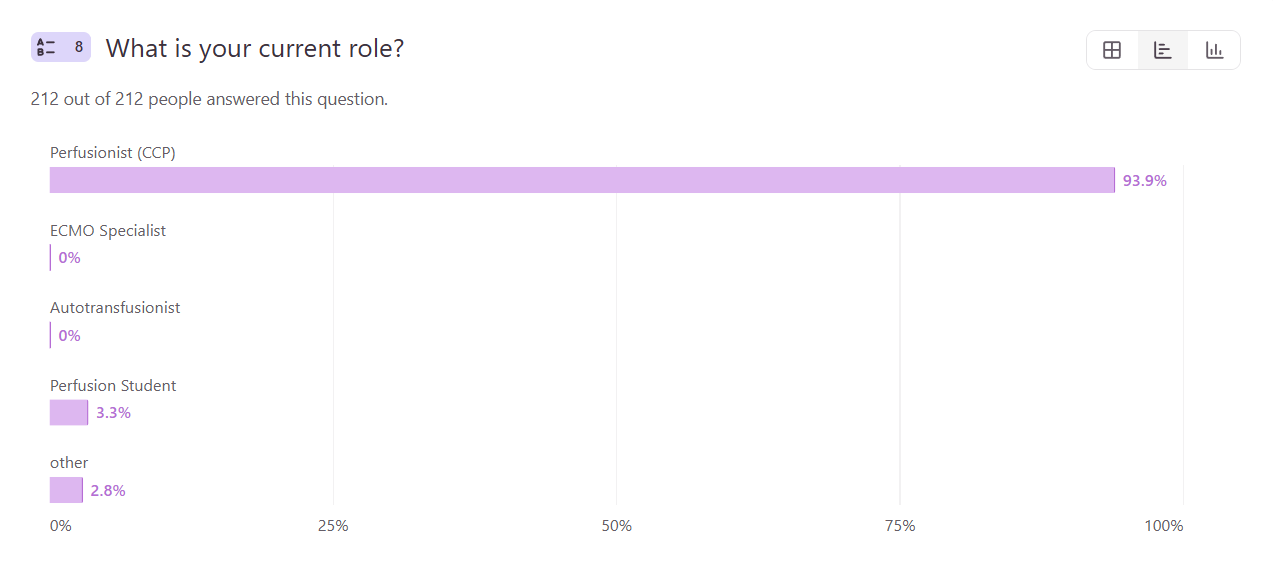
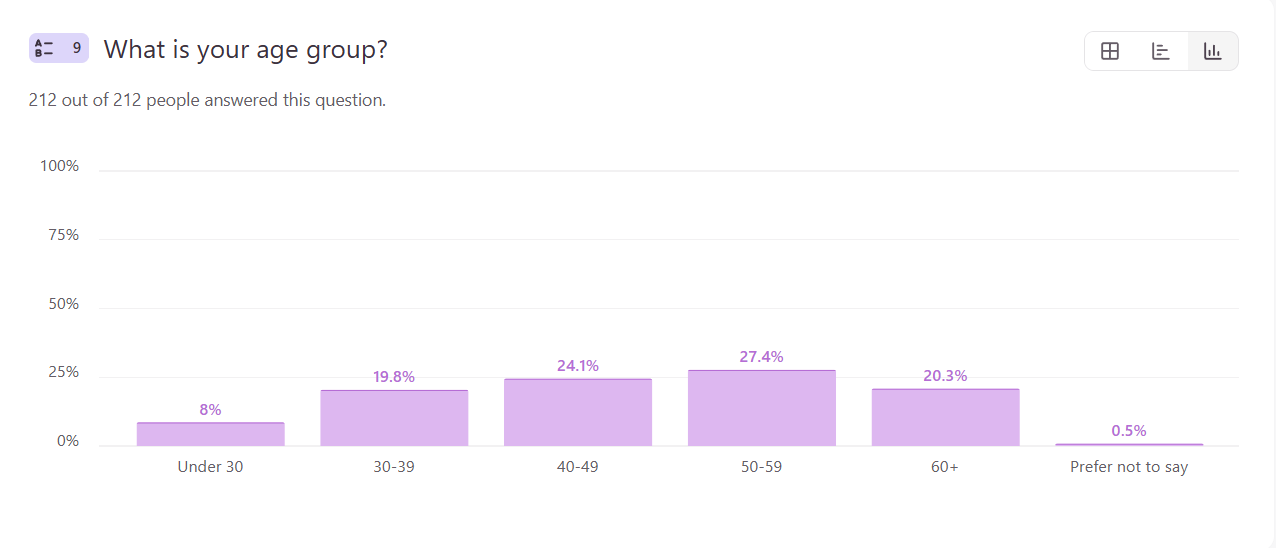
The respondent base is largely composed of practicing perfusionists, with a strong concentration of mid- to late-career professionals. These clinicians have seen the job market shift over time and bring valuable context to today’s trends. Their perspectives on workforce growth, training program size, and job availability are grounded in firsthand experience, which adds weight to concerns about potential oversupply and the need for better alignment between education and demand.
Responses by Job Title
Responses by Age Group
Question 1: Workforce Growth vs. Demand
More than half of respondents (52.4%) believe the perfusion workforce is growing faster than demand, signaling a clear concern about potential oversupply. While not unanimous, this majority suggests that many clinicians are already seeing early signs of imbalance, whether through increased competition for roles, shifts in hiring patterns, or changes in compensation expectations.
At the same time, the 18.4% who selected “unsure” highlights a broader issue: limited visibility into workforce data. Without consistent, transparent insights into job openings, retirements, and graduate output, perceptions are often shaped by local or anecdotal experience. This lack of clarity may be contributing to both concern and uncertainty across the field.
Question 2: Shifts in the Job Market
Responses to this question show a job market that is changing, but not dramatically in one direction. The largest groups selected “moderately fewer opportunities” (37.3%) and “moderately more opportunities” (31.1%), while far fewer respondents chose the “significantly more” (10.4%) or “significantly fewer” (6.1%) options. This distribution suggests that most clinicians are experiencing shifts at the margins rather than a sharp contraction or surge.
That distinction matters. The dominance of “moderate” responses points to a market that feels tighter or more competitive in some areas, but not fundamentally disrupted. It may indicate slower hiring, more selective recruitment, or regional variability rather than a widespread shortage or oversupply. In other words, the perception is less about extremes and more about gradual change, where opportunities still exist but may require more flexibility, stronger qualifications, or broader geographic reach than in the past.
Question 3: Job Placement for New Graduates
With 50% of respondents indicating that graduates are securing jobs before graduation, the data suggests that demand has not disappeared. However, the presence of respondents who report delays or difficulty finding jobs introduces a more nuanced reality.
This split points to a potential widening gap in outcomes. Graduates from well-established programs or those willing to relocate may still find opportunities quickly, while others face a more competitive environment. As training programs expand, this variability may become more pronounced, reinforcing concerns raised elsewhere in the poll.
Question 4: Training Program Enrollment
The strongest consensus in the poll appears here, with 71.2% of respondents believing that training programs are enrolling too many students. This level of agreement underscores how central this issue has become to workforce conversations.
Beyond sheer numbers, many clinicians are likely thinking about the downstream effects of rapid program expansion. Increased class sizes can strain clinical training sites, limit case exposure, and place additional burden on preceptors. Over time, this may impact both job readiness and the overall perception of new graduates entering the field.
Question 5: Drivers of Future Demand
Looking ahead, respondents identified growth in ECMO and advanced support programs as the leading driver of demand, followed closely by cardiac surgery trends and training program expansion. This mix of responses highlights both optimism and caution.
Emerging technologies and expanding clinical applications present clear opportunities for growth. At the same time, factors like shifting responsibilities to other roles and fluctuations in surgical volume introduce uncertainty. The inclusion of training program expansion as a demand driver also reflects an awareness that supply itself can influence how the job market evolves.
Question 6: Strengthening Long-Term Stability
When asked what would most strengthen long-term stability, respondents pointed to a combination of managing supply and expanding opportunity. Adjusting training program size (34.4%) and expanding the scope of practice (30.7%) were nearly equal priorities, with improved workforce transparency also ranking highly.
Together, these responses suggest that no single change will solve the issue. Instead, stability will likely depend on a coordinated approach that aligns education with demand, creates new roles for perfusionists, and provides clearer data to guide decision-making. Without that alignment, the concerns raised throughout the poll may continue to grow.
Question 7: What Will Shape the Future of the Perfusion Workforce?
If earlier questions raised concerns, Question 7 brings them into focus. The responses reflect a profession actively debating how growth, opportunity, and identity will evolve in the years ahead.
Training program expansion remains a central issue. Many respondents linked increasing class sizes to both job market pressure and declining training quality. One noted, “Too many schools are opening, and they are growing too much. Student quality has taken a significant drop,” while another called for “Right-sizing the training programs.” These perspectives suggest that growth without coordination is being viewed as a real risk.
At the same time, there is strong momentum around expanding the role of perfusionists. ECMO, NRP, and transplant-related work were frequently cited as areas of opportunity. As one respondent shared, “Perfusionists playing key roles in organ procurement and ECMO programs.” These areas are shaping where demand may grow and how the profession can evolve.
Workforce balance also remains top of mind. The relationship between retiring clinicians and incoming graduates continues to raise questions, captured in the response, “Retiring perfusionists vs. graduation rates.” It reflects uncertainty around whether supply and demand will align over time.
Technology adds another layer. Mentions of AI and advanced devices signal change, but also caution, particularly around maintaining control of core responsibilities.
Taken together, the responses show a profession trying to manage growth carefully while expanding its impact.
Reflections on Perfusion Workforce Trends
This month’s poll highlights a profession navigating growth with caution. While opportunities remain, there is clear concern about how training expansion, workforce supply, and evolving roles are being managed. The conversation points toward the need for alignment across education, hiring, and clinical practice.
Looking ahead, the profession’s stability will depend on how effectively it balances supply with demand while continuing to expand its clinical impact. The responses make one thing clear: perfusionists are paying close attention to where the field is headed and what it will take to sustain it.
Stay tuned for the next Pulse on Perfusion as the series continues to share insights from across the community.
Appendix of Additional Insights
- Younger respondents are more likely to perceive a decline in job opportunities. Among those under 30, 64.71% report moderately fewer opportunities, compared to more balanced views in older groups.
- Older respondents tend to report stronger job market conditions. In the 60+ group, 39.53% report moderately more opportunities, and none report significantly fewer opportunities.
- Perceptions of demand align with job placement outcomes. Among those who see increased demand, 66.67% report graduates finding jobs before graduation, while lower demand perceptions correlate with longer job searches.
- Even among those who perceive fewer opportunities, early placement remains common. Over a third (35.44%) still report graduates securing roles before graduation, suggesting opportunity exists but may be unevenly distributed.